Guitar plugins - a journey (part 2)
guitar
I’ve always thought some day I’d upgrade to a high-end modeling platform, be it Helix or Fractal or NeuralDSP or whatever is the best fit for me at the time I’m ready to take the plunge. Yeah, I also have a dream of owning a nice tube amp and might do that some day as well. But only playing at home (at lower volumes) and wanting the flexibility of messing around with a variety of tones, it just makes more sense to go the modeling route. You can easily spend between $1,000-$2,000+ for a good tube amp. You can get a high-end modeling solution, which includes a bunch of different amps and effects, for less than that, which seems like a good deal. So I was really excited to be able to test out Helix Native and see and see if this might be a way to get into this higher-tier of the modeling world without spending a bunch of money.
Unfortunately, after a few hours of testing I didn’t find that it sounded that much better than my GTX100. In fact I don’t think it sounded as full and present as the GTX100, even though I was using the same speaker. I think the main issue here is that Helix Native allows you to tweak a lot of options, including, and perhaps, most importantly, the cabinet simulation, which involves different microphone types and placements and even entirely different (third-party) impulse responses (IRs). I think it’s safe to say that Helix is better than the GTX100, if you know how to tweak it. But, I don’t. So I was a bit disappointed with how it sounded, at least with minimal changes out of the box.
This was kind of a big moment for me. I love my GTX100 and think the Fender “cleans” it provides sound amazing. But I always thought the overdriven stuff wasn’t that great and had the notion that the high-end modeling solutions, like Helix, would be a million times better. But after hearing what Helix Native had to offer, I realized that the GTX100 is actually pretty damn good.
Again, I’m sure this is just my lack of experience and skill in dialing in Helix tones. It’s fun to tweak and mess around with this stuff, but, at least for me, that fun only continues up to a point. After a while I just want decent tones that make my playing sound better (or at least allow me to have more fun since my playing isn’t that great).
Around this time Universal Audio had also put nearly all of its plugins on sale so I got the trial versions of a few of their amps and started experimenting with those. Right away I found the presets and, really, just the the amp plugins in general sounded better than Helix Native – at least with minimal tweaking. I felt that the Ruby (Vox AC30) and Lion (Marshall Plexi) also sounded a lot better than the comparable amps in the GTX100. And I liked the interface/user experience with the UA plugins a lot more than Helix Native; there were things to tweak, but it wasn’t overwhelming. UA’s sale made it a lot cheaper to buy these than Helix Native so I did that and had a lot of fun messing around with them.
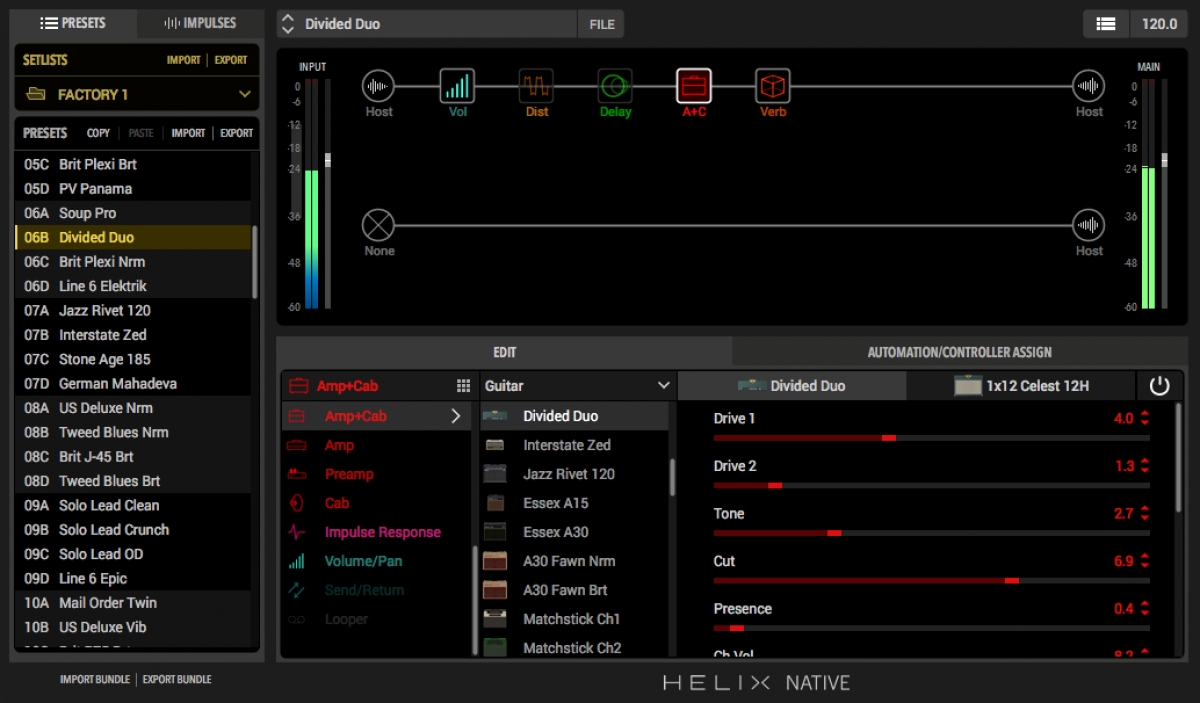 Helix Native plugin interface
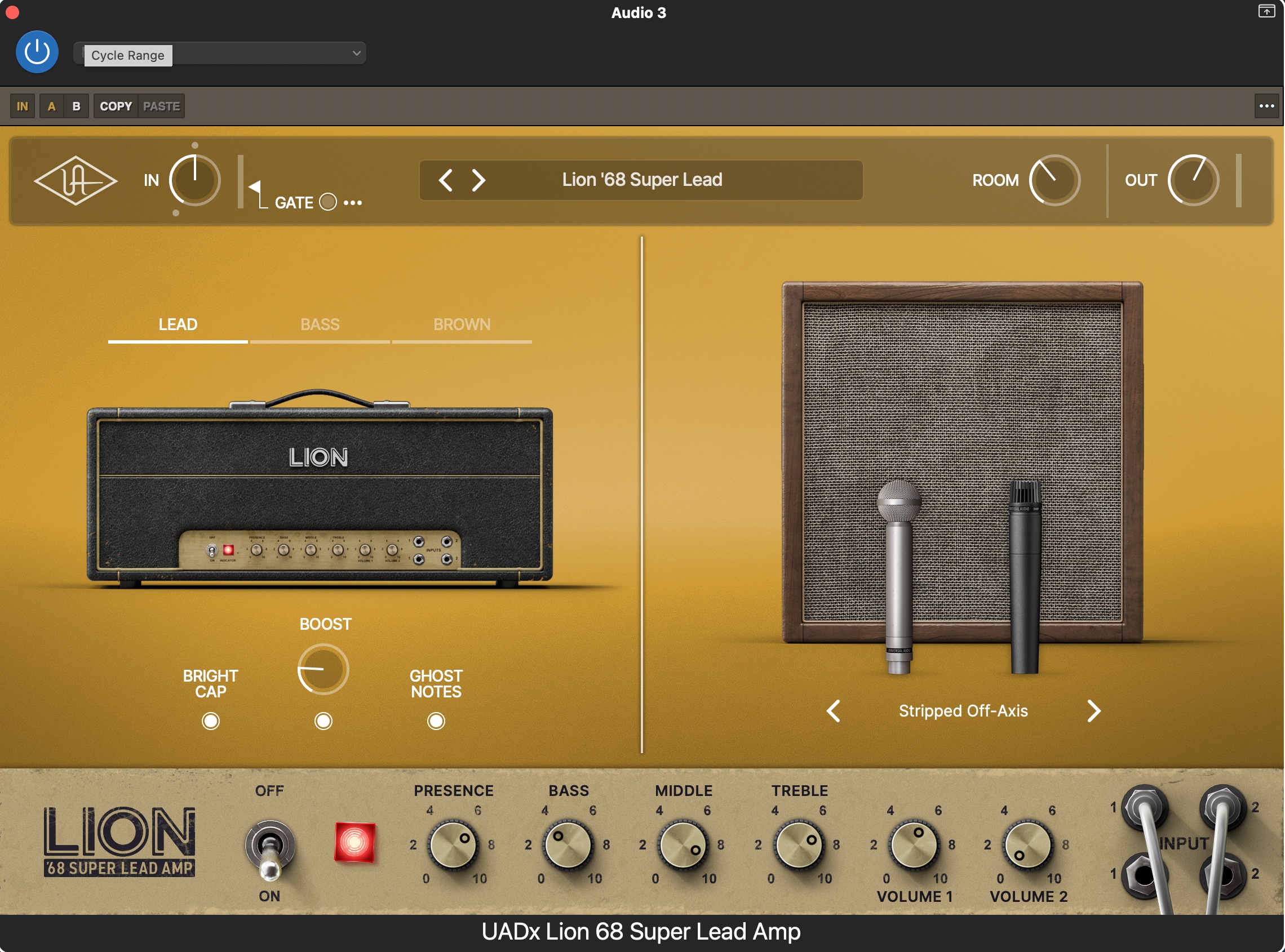 Universal Audio Lion plugin interface
I should note that nearly all of this stuff is quite subjective. Arguing about guitar tone and even UX preferences is a bit like arguing about favorite foods or colors. Some people prefer different things, which is what makes life interesting, right? There is no single right answer here; you like what you like and that’s cool.
A week or so after I bought the aforementioned guitar amp plugins from Universal Audio they dropped a brand new plugin called “Paradise Guitar Studio,” which, as Murphy’s Law would have it, includes all of the guitar amps I had just bought. :( However, it also includes the new “Enigma” amp, which I didn’t have. (The Enigma amp model is really three different types of Dumble amplifiers.) It packages everything up nicely in a single interface and also includes a bunch of effects like various distortion and modulation pedals as well as reverb, equalizers, compressors, etc. And, it allows you to mix and match all the various speaker cabinets and microphones between the different amp models. Prior to the Paradise Guitar Studio plugin you couldn’t use cabinets from the Marshall amp with the Deluxe Reverb amp, for instance. Universal Audio was also really cool in that they recognized people who had purchased the individual components (like me!) and offered a really good discount on this new plugin so I ended up buying it right away and have been using it almost exclusively since I did.
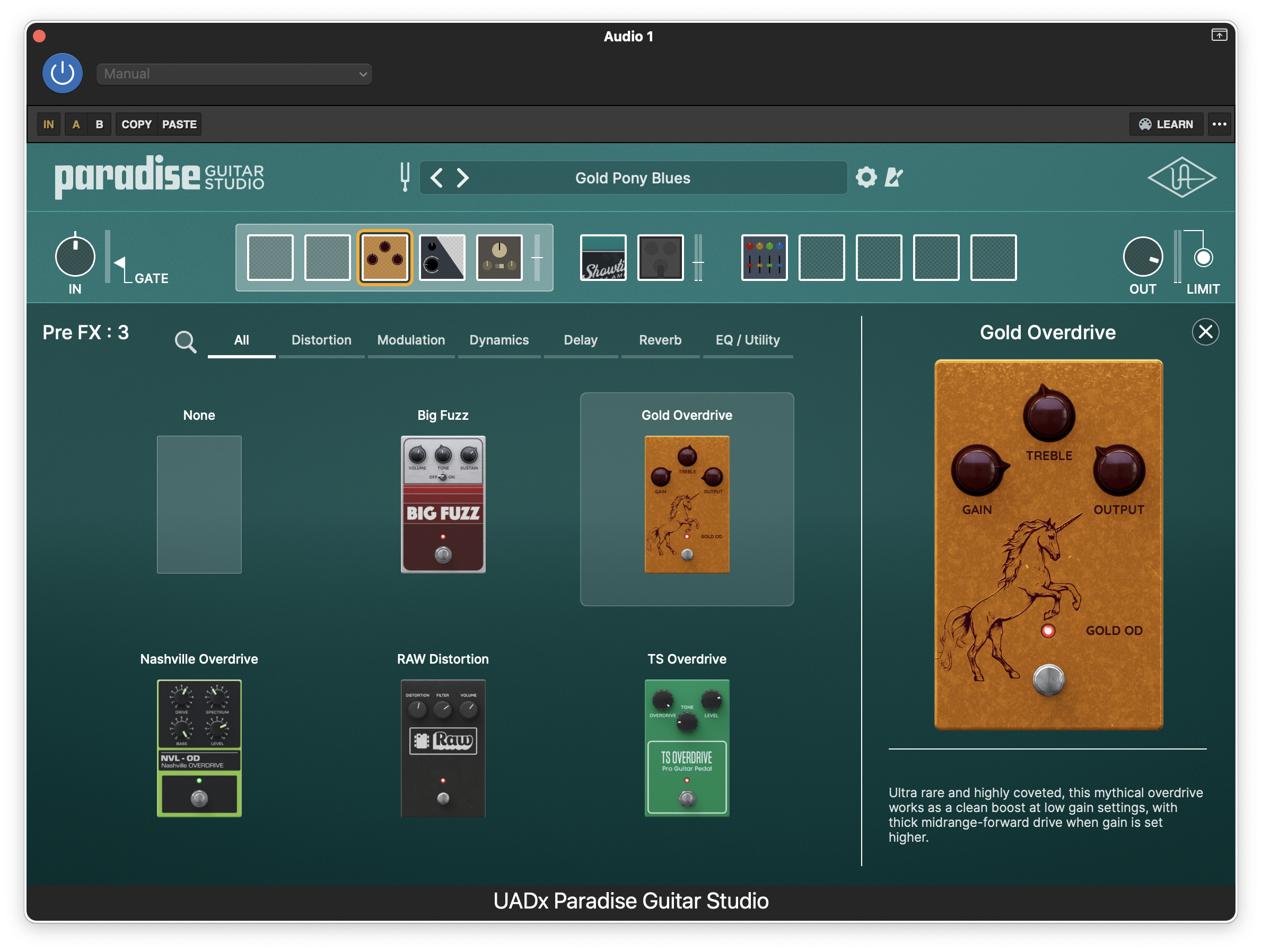 Universal Audio Paradise Guitar Studio pre-FX interface
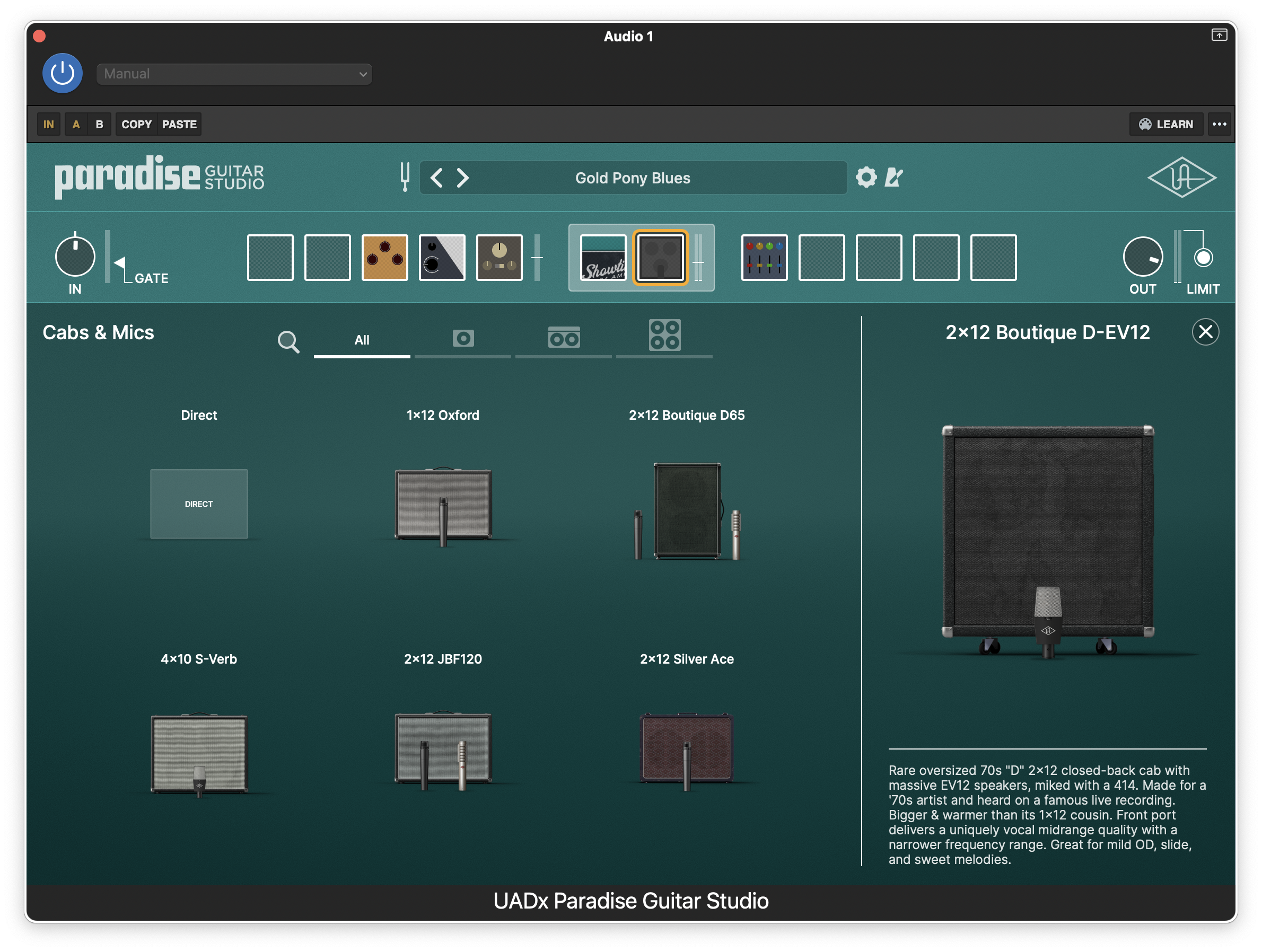 Universal Audio Paradise Guitar Studio speaker/cabinet interface
So that’s where I’m at now. I’m hoping to spend some time dialing in some new presets and learning more about the Enigma amp options after the holidays. There are always new things to learn about and explore when it comes to this stuff, but I think for now I’m really happy with all of the different options I have at the moment re: amps and effects.